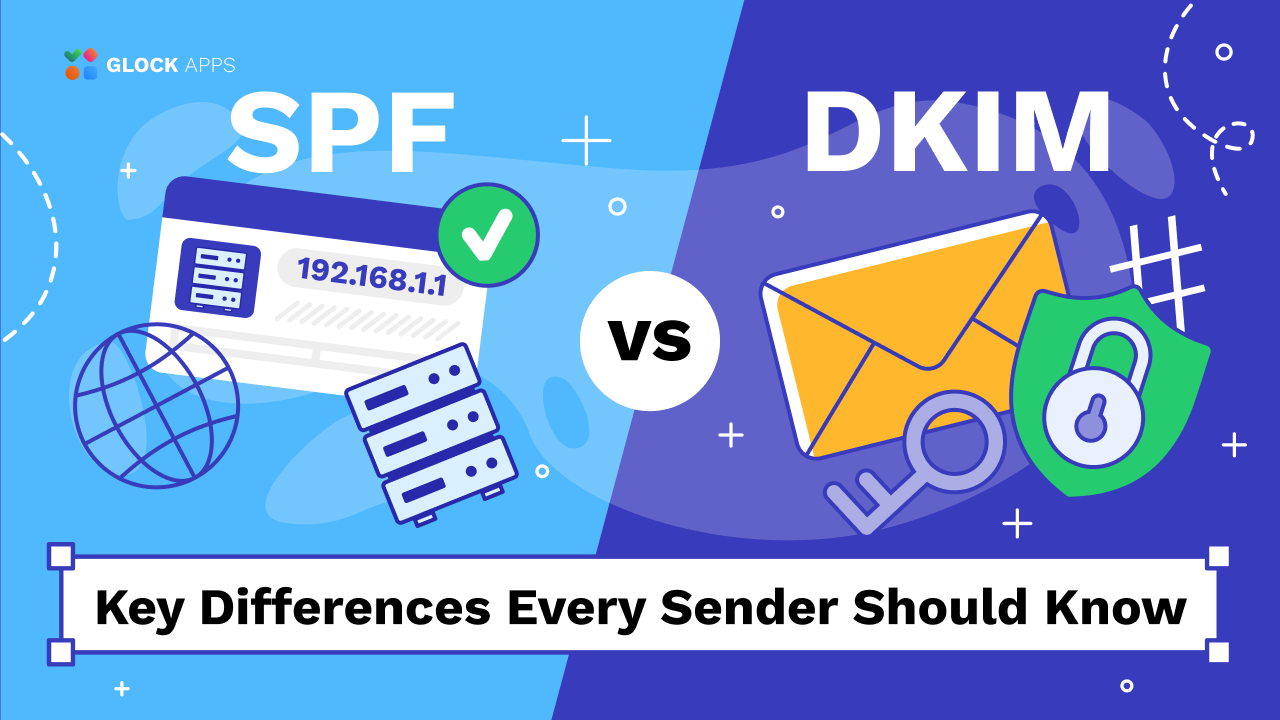
SPF vs DKIM: Key Differences Every Sender Should Know
Estimated reading time: 6 minutes
Email authentication has become one of the most important parts of successful email marketing. If you send campaigns, transactional emails, newsletters, or business communications, proving that your emails are legitimate helps protect your domain reputation and improves inbox placement.
Two of the most widely used authentication methods are DKIM and SPF. They often appear together in deliverability discussions, yet many senders still ask the same question: What’s the difference between DKIM and SPF, and do you really need both?
The short answer is yes. While they work differently, they complement each other. Using only one can leave gaps in your protection and hurt deliverability over time.
Key Takeaways
- SPF verifies which mail servers are allowed to send emails on behalf of your domain.
- DKIM adds a digital signature that proves the email was not altered in transit.
- SPF focuses on sender authorization, while DKIM focuses on message integrity.
- Using both improves trust with mailbox providers like Google, Microsoft, and Yahoo.
- Both protocols support stronger standards such as DMARC.
- In my experience, businesses using both see better long-term deliverability and fewer spoofing issues.
What Is SPF?
SPF stands for Sender Policy Framework. It is an authentication protocol that tells receiving mail servers which IP addresses or sending services are allowed to send email for your domain.
You publish an SPF record in your DNS settings. When an email arrives, the receiving server checks whether the sending server is listed in that record.
Example of What SPF Does
If your company uses platforms like Mailchimp or SendGrid, you can authorize them in your SPF record. This signals that emails from those systems are legitimate.
Benefits of SPF
- Helps block unauthorized senders
- Reduces domain spoofing risks
- Improves sender trust
- Easy to implement initially
Limitations of SPF
SPF can break when emails are forwarded. It also does not verify whether the content of the message was changed after sending.
What Is DKIM?
DKIM stands for DomainKeys Identified Mail. It works by attaching a cryptographic signature to each outgoing email.
The receiving server uses the public key stored in your DNS records to verify that:
- The email really came from your domain
- The content has not been modified during transit
Why DKIM Matters
From my experience, DKIM is especially valuable because mailbox providers place strong trust in messages that pass signature validation.
Benefits of DKIM
- Protects message integrity
- Helps prove domain ownership
- Works better than SPF in forwarding scenarios
- Supports a stronger domain reputation over time
Limitations of DKIM
DKIM requires proper setup through your email platform. If keys are outdated or signatures are broken, authentication can fail.
SPF vs DKIM: Comparison Table
To make the differences easier to understand, here is a quick side-by-side comparison of SPF and DKIM:
| SPF | DKIM | |
| Main Purpose | Authorizes senders | Verifies message authenticity |
| Works Through | DNS IP/server list | Digital signature |
| Protects Against Spoofing | Yes | Yes |
| Checks Message Content | No | Yes |
| Can Break on Forwarding | Often | Less often |
| Important for DMARC | Yes | Yes |
Do You Need Both SPF and DKIM?
Yes, absolutely. SPF and DKIM solve different problems. SPF checks who is allowed to send, while DKIM checks whether the message is trustworthy.
Using only SPF means you miss message integrity checks. Using only DKIM means you lose sender authorization benefits.
When both are active, mailbox providers get multiple trust signals. This often leads to:
- Better inbox placement
- Fewer spam folder issues
- Stronger domain reputation
- Better protection against phishing attempts
That is why most serious senders implement both before scaling campaigns.
How DKIM and SPF Work with DMARC
DMARC builds on SPF and DKIM by telling mailbox providers what to do when authentication fails.
Without SPF or DKIM, DMARC cannot function properly. With both in place, DMARC becomes much more effective at preventing abuse.
Many teams use GlockApps to monitor authentication performance, identify setup errors, and therefore improve inbox placement across providers.
How SPF and DKIM Impact Email Deliverability
SPF and DKIM have a major influence on email deliverability because mailbox providers evaluate authentication when deciding where your message should go. If an email fails authentication, it may be filtered to spam, flagged as suspicious, or blocked before it reaches the recipient. When messages consistently pass SPF and DKIM checks, providers like Google, Microsoft, and Yahoo receive stronger signals that your emails are legitimate and safe to deliver.
From my experience, authentication is one of the first technical areas businesses should fix when inbox placement starts to decline. Even strong content and engaged subscribers may not overcome missing or broken authentication records.
Benefits of SPF and DKIM for deliverability:
- Better inbox placement by increasing trust with mailbox providers
- Lower spam folder risk when emails pass authentication checks
- Stronger sender reputation over time through consistent verified sending
- Protection against spoofing that could damage your brand reputation
- Higher engagement potential because more emails reach real inboxes
- Improved DMARC performance since DMARC relies on SPF and/or DKIM alignment
- More stable sending results across campaigns and different mailbox providers
Important to Remember
SPF and DKIM alone do not guarantee perfect deliverability. Providers also review engagement, complaint rates, sending volume, list quality, and content. However, without SPF and DKIM properly configured, even well-run campaigns can struggle. They are a foundational part of every serious email deliverability strategy.
Common Mistakes to Avoid
1. Using SPF but Forgetting DKIM.
This is common with smaller businesses. SPF alone is no longer enough for strong trust signals.
2. Too Many SPF Lookups.
Complex SPF records can exceed DNS lookup limits.
3. Broken DKIM Keys.
Rotating or misconfigured keys can cause silent failures.
4. Never Testing Authentication.
Always test your records after setup. Platforms like GlockApps can help validate SPF, DKIM, and inbox placement before sending large campaigns.
Best Practice Recommendation
I recommend this minimum setup:
- SPF configured correctly
- DKIM enabled on all sending platforms
- DMARC policy added
- Regular monitoring of domain reputation
- Deliverability testing before major campaigns
This creates a much stronger foundation than relying on one protocol alone.
Conclusion
DKIM and SPF are partners. SPF confirms that the sender is authorized. DKIM confirms that the message is authentic and unchanged. Together, they create a stronger trust framework for mailbox providers and recipients.
If you are serious about email deliverability, brand protection, and inbox placement, you should use both.
FAQ
SPF verifies that the server sending the email is authorized to send on behalf of your domain. DKIM adds a digital signature that confirms the message was not changed and truly came from your domain.
Yes. They protect different parts of the email process. Using both gives mailbox providers stronger trust signals and supports better deliverability.
No. SPF and DKIM are authentication methods, while DMARC uses their results to apply policies and reporting. They work best together.
Related Posts

DKIM (DomainKeys Identified Mail) is an effective email authentication method that ensures the integrity and authenticity of your emails while Read more
Email is an effective tool for corporate and personal communication in the digital age. But as phishing scams and email Read more

If you’re responsible for managing email domains, you've likely come across the need to work with SPF records. Email authentication Read more

SPF stands for Sender Policy Framework, and it is an email authentication protocol. The purpose of SPF is to check Read more