Subscription Renewal Email: Best Practices to Keep Customers and Revenue Flowing
Estimated reading time: 5 minutes
For subscription-based businesses, renewals are just as important as acquiring new customers. Every expiring plan represents a moment of decision: will the user continue the relationship with your brand, or quietly churn?
That decision is often influenced by one simple message — the subscription renewal email. A well-crafted renewal email reminds subscribers about the value they receive, provides transparency about upcoming charges, and gives them an easy path to continue their subscription.
Key Takeaways
- Subscription renewal emails remind customers that their plan is about to expire and encourage them to continue the service.
- Clear timing, concise messaging, and strong CTAs significantly improve renewal rates.
- Personalization and transparency about billing build trust and reduce cancellations.
- Deliverability plays a critical role because renewal emails must reach the inbox at the right moment.
- Testing your emails with tools like GlockApps helps ensure they avoid spam filters and arrive where customers expect them.
What Is a Subscription Renewal Email?
A subscription renewal email is a notification sent to customers informing them that their subscription plan is about to renew or expire. It usually includes details about the billing date, the plan being renewed, and instructions for managing the subscription.
These emails serve several purposes:
- reminding customers of upcoming charges
- preventing unexpected billing disputes
- giving users a chance to upgrade, downgrade, or cancel
- reinforcing the value of the service
From streaming platforms to SaaS companies and membership communities, renewal emails are an important part of subscription lifecycle communication.
Why Subscription Renewal Emails Matter
- Renewal emails help businesses maintain recurring revenue while improving customer satisfaction.
- When users know exactly when their plan renews and what they are paying for, they feel more in control.
- Transparency reduces refund requests, customer support tickets, and negative experiences.
- Renewal messages also create a strategic opportunity to re-engage customers. Businesses can highlight new features, remind users of benefits, or offer incentives that encourage continued subscription.
However, even the best renewal email will fail if it never reaches the inbox. Many subscription reminders are transactional emails, but they can still be filtered incorrectly. That’s why I recommend testing your messages with deliverability monitoring platforms such as GlockApps to confirm that renewal notifications land in the inbox rather than the spam folder.
Essential Elements of an Effective Renewal Email
Successful renewal emails usually contain several key components.
Clear subject line.
Subscribers should immediately understand why they received the email.
Renewal date and billing details.
Transparency helps avoid confusion or disputes.
Value reminder.
Briefly highlight the benefits customers continue to receive.
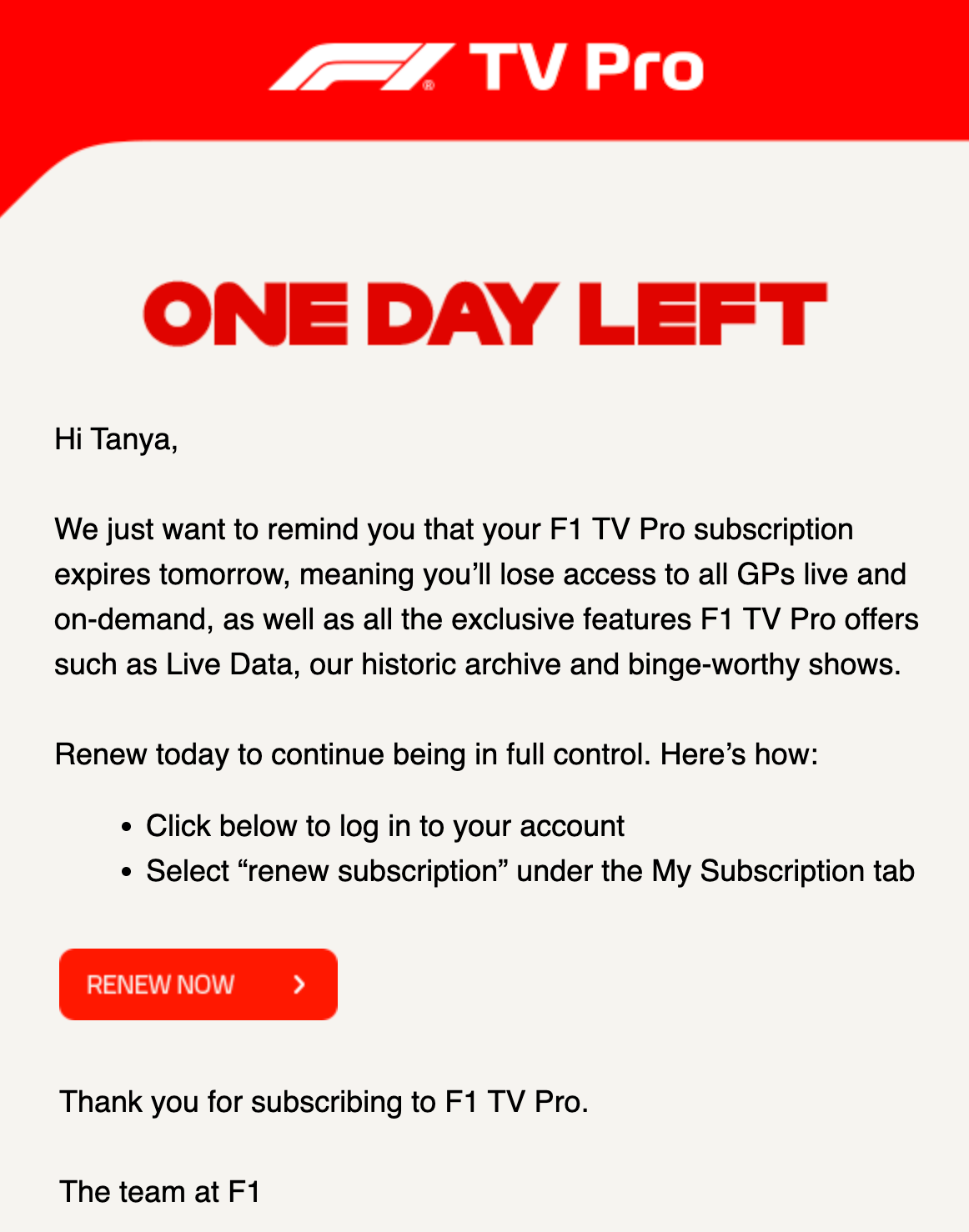
Simple action options.
Provide buttons for renewing, managing the plan, or contacting support.
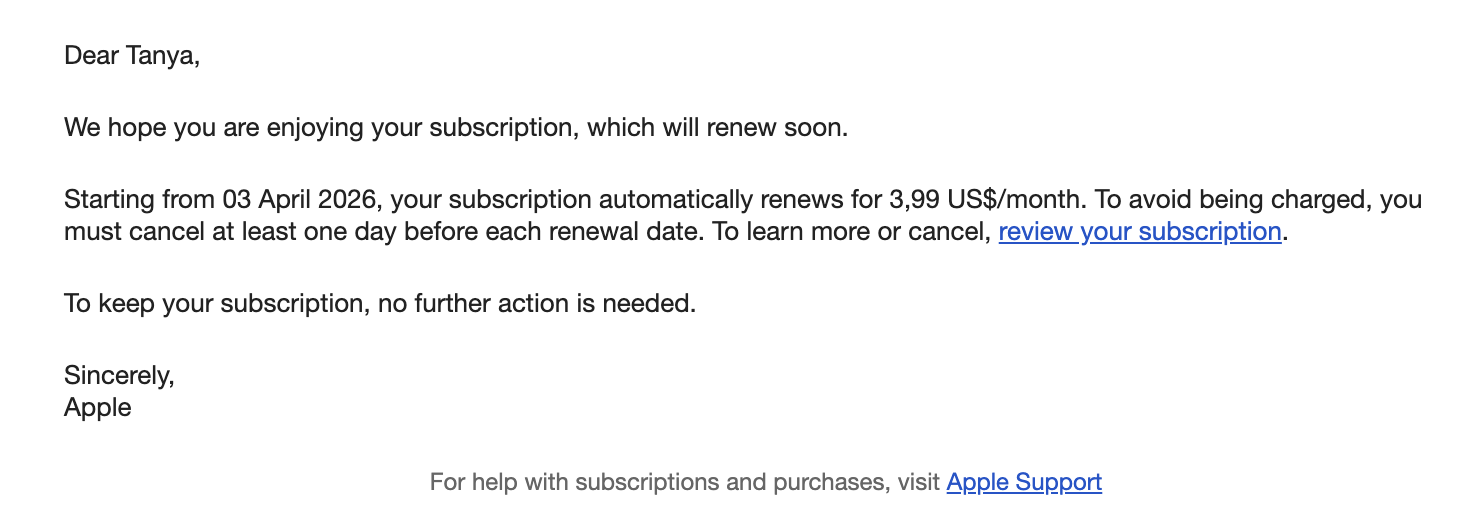
Friendly tone.
Renewal emails should feel helpful rather than pushy.
Typical Structure of a Subscription Renewal Email
This straightforward structure ensures that customers can quickly understand the situation and take action if necessary.
| Email Element | Purpose |
| Subject line | Alerts the subscriber that their subscription is renewing soon |
| Opening reminder | States the renewal date and plan details |
| Value recap | Reinforces why the service is worth continuing |
| Call-to-action | Provides buttons to renew, manage, or upgrade the plan |
| Support link | Allows customers to contact support if needed |
Subscription Renewal Email Templates
Here are two universal templates you can use:
Template 1: Friendly Renewal Reminder
Subject: Your subscription renews soon
Hi [Name],

Just a quick reminder that your [Plan Name] subscription will renew on [Date].

We hope you're enjoying everything your plan offers, including [key benefit or feature]. Your subscription will automatically renew, so you can continue using the service without interruption.

If you’d like to review or manage your subscription, simply click the button below.

[Manage Subscription]

If you have any questions, our team is always happy to help.

Best regards,
[Company Name]
Template 2: Short Renewal Notification
Subject: Reminder: your plan renews on [Date]
Hello [Name],

This is a quick reminder that your [Plan Name] subscription will renew on [Date].

Your payment method on file will be charged [Price] to continue your access to [Service/Product].

You can review your subscription details or make changes anytime.

[Review Subscription]

Thank you for choosing [Company Name].
Timing: When to Send Renewal Emails
Most businesses send multiple renewal reminders to ensure customers are informed.
Common timing strategies include:
- 7-14 days before renewal — early notification
- 3-5 days before renewal — reminder email
- Day of renewal — confirmation email
- After renewal — receipt or confirmation message
Spacing reminders helps customers stay informed without feeling overwhelmed.
Before sending these messages at scale, it is wise to test them for spam placement. Run your renewal emails through GlockApps to analyze how different mailbox providers filter them and ensure that time-sensitive notifications reach your subscribers.
Best Practices for Subscription Renewal Emails
Several strategies can help improve renewal rates.
Use clear language.
Avoid vague messaging, because subscribers should instantly understand what is happening.
Add personalization.
Including the customer’s name or plan details increases engagement.
Highlight benefits.
Remind subscribers why they originally signed up.
Provide control.
Allow customers to easily manage or cancel their subscription.
Optimize deliverability.
Ensure renewal notifications consistently reach the inbox.
When all of these factors work together, renewal emails become a powerful retention tool rather than just a billing notice.
Conclusion
Subscription renewal emails play a crucial role in maintaining customer relationships and protecting recurring revenue. A well-designed renewal message informs users, reinforces value, and offers a simple path to continue their subscription.
When your renewal emails arrive in the inbox at the right moment, they become more than reminders. It’s also an opportunity to reaffirm the value of your service and keep customers engaged for another subscription cycle.
FAQ
A subscription renewal email is a message sent to customers to inform them that their subscription is about to renew. It usually includes the renewal date, billing details, and options to manage the subscription.
A good renewal email should clearly state the renewal date, subscription plan, price, and provide an easy option to manage or cancel the subscription.
Yes, even transactional emails can sometimes be filtered to spam. Testing emails with tools like GlockApps helps verify that renewal notifications reach the inbox instead of the spam folder.
Related Posts
A transactional email is an automated email message triggered by a specific user behaviour on a website or in an Read more

Every “reset your password,” “your order is confirmed,” and “your package is on the way” message is a transactional email Read more
Cold emails are electronic messages sent to a user with whom the sender doesn’t have prior relationship to initiate the Read more

Open your inbox on any random morning and you’ll see it: a flood of emails shouting for attention. Discounts, announcements, Read more