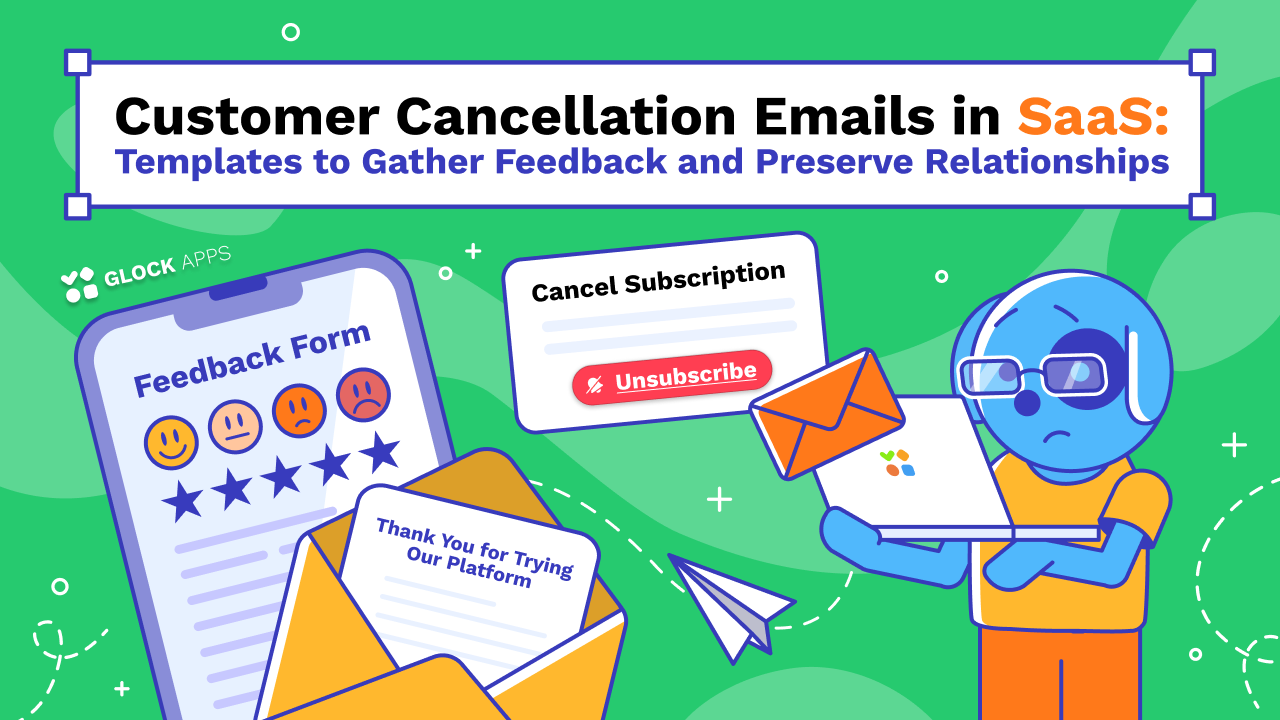
Customer Cancellation Emails in SaaS: Templates to Gather Feedback and Preserve Relationships
Estimated reading time: 4 minutes
Customer cancellations are an unavoidable part of running a SaaS business. Even the most successful platforms experience churn. But the way you communicate with users after they cancel can significantly influence how they remember your product and whether they might return later.
From my experience working with SaaS email communication, companies that treat cancellation emails as a strategic touchpoint often gain valuable insights about their product, pricing, onboarding, or support experience.
Key Takeaways
- A well-written cancellation email can turn a negative moment into a valuable learning opportunity.
- Asking for feedback helps SaaS companies understand churn and improve retention strategies.
- The tone should be respectful, calm, and supportive, not defensive or pushy.
- Offering help or alternatives can sometimes help recover customers or keep the relationship positive.
- Testing deliverability ensures your emails reach the inbox, even when they are triggered automatically.
Why Cancellation Emails Matter for SaaS Companies
Many companies overlook cancellation emails and treat them as purely transactional. In reality, they serve several important functions:
Understanding churn.
A simple question about why the customer left can reveal patterns such as pricing concerns, missing features, or onboarding friction.
Maintaining brand reputation.
A respectful and friendly tone can leave customers with a positive impression, even if they decided to leave.
Encouraging future returns.
Customers who feel respected are more likely to come back when their needs change.
Improving product decisions.
Feedback collected during cancellation helps teams prioritize development and customer experience improvements.Of course, these emails must actually reach the inbox. Before sending automated lifecycle emails like cancellation confirmations, I always recommend running inbox placement tests using tools like GlockApps to make sure they are delivered properly.
Key Elements of an Effective SaaS Cancellation Email
A strong cancellation email typically includes a few essential components.
- First, it confirms the cancellation clearly so the user feels confident their request has been processed.
- Second, it thanks the customer for using the product. This reinforces goodwill and shows appreciation for their time.
- Third, it invites feedback, ideally in a quick and low-effort way, such as a short survey or one-click response.
- Finally, it keeps the door open. Mention that the customer is welcome to return anytime or contact support if they need assistance.
The goal is not to pressure users into staying. Instead, it’s about preserving trust and learning from the experience. Here’s the recommended structure:
| Section | Purpose | Example |
| Cancellation Confirmation | Reassures the user the request is completed | “Your subscription has been successfully cancelled.” |
| Appreciation | Shows gratitude for using the service | “Thank you for being part of our community.” |
| Feedback Request | Helps understand churn reasons | “Would you mind sharing why you decided to cancel?” |
| Support Option | Provides help if cancellation was accidental | “Our support team is here if you need assistance.” |
| Friendly Closing | Maintains a positive relationship | “You’re always welcome back.” |
Cancellation Email Templates for SaaS
Below are several templates you can adapt depending on your tone and customer journey:
Template 1: Simple Cancellation Confirmation
Subject: Your Subscription Has Been Cancelled
Hi [Name],

This email confirms that your subscription has been successfully cancelled.

We truly appreciate the time you spent using our platform and the trust you placed in our product.

If you have a moment, we’d love to know what influenced your decision to leave. Your feedback helps us improve and build a better experience for our users.

You’re always welcome back, and if you ever need assistance in the future, our team will be happy to help.

Best regards,
[Company Name]
Template 2: Feedback-Focused Cancellation Email
Subject: Thank You for Using Our Platform
Hi [Name],

We’re sorry to see you go, but your subscription has now been cancelled as requested.

If you’re willing to share, we’d really value your feedback. Understanding why customers leave helps us improve the product and the overall experience.

It only takes a minute to answer a short question: What made you decide to cancel?

Thank you again for being part of our journey, and we hope to see you again someday.

Warm regards,
[Company Name]
Template 3: Cancellation with Offer to Help
Subject: Your Subscription Has Been Cancelled
Hi [Name],

Your subscription has been canceled and no further charges will occur.

Before you go, we wanted to let you know that if something didn’t work as expected, our team would be happy to help. Sometimes, small adjustments or features people miss can make a big difference.

If you'd like to share your experience, we’d really appreciate your feedback.

Thank you for giving our product a try, and we wish you success with your projects.

Best wishes,
[Company Name]
Template 4: Friendly Exit Email
Subject: Thank You for Trying Our Platform
Hi [Name],

Your account cancellation has been completed.

We’re grateful that you chose our platform and spent time exploring what we offer.

If there’s anything you’d like to share about your experience we would love to hear it. Honest feedback helps us continue improving.

And of course, if your needs change in the future, you’re always welcome to come back.

Take care,
[Company Name]
Deliverability Considerations for Cancellation Emails
Because cancellation emails are usually triggered automatically, many teams forget to monitor their deliverability. However, even transactional emails can sometimes land in spam if authentication or sender reputation issues appear.
Before launching automated lifecycle emails, I recommend testing your messages using a deliverability platform like GlockApps. It allows you to check inbox placement, authentication, and potential spam triggers so that important transactional messages reliably reach your customers.
Conclusion
Customer cancellation emails may feel like the end of a relationship, but they don’t have to be. Handled thoughtfully, these emails can help SaaS companies collect valuable feedback, maintain good relationships, and even encourage former users to return in the future.
The key is simple: be respectful, show appreciation, and invite honest feedback without pressure.
FAQ
Yes. Cancellation moments provide a valuable opportunity to understand why customers leave.
Most SaaS businesses automate cancellation emails through their billing or CRM systems. However, these emails should still be tested for deliverability and clarity to ensure users receive accurate information about their subscription status.
Indirectly, yes. While they won’t always stop a cancellation, the feedback gathered from these emails can help companies improve their product, onboarding, and customer support, ultimately reducing churn over time.
Related Posts

When it comes to Software as a Service (SaaS), the onboarding process is crucial. It’s your chance to make a Read more
A transactional email is an automated email message triggered by a specific user behaviour on a website or in an Read more

Every “reset your password,” “your order is confirmed,” and “your package is on the way” message is a transactional email Read more
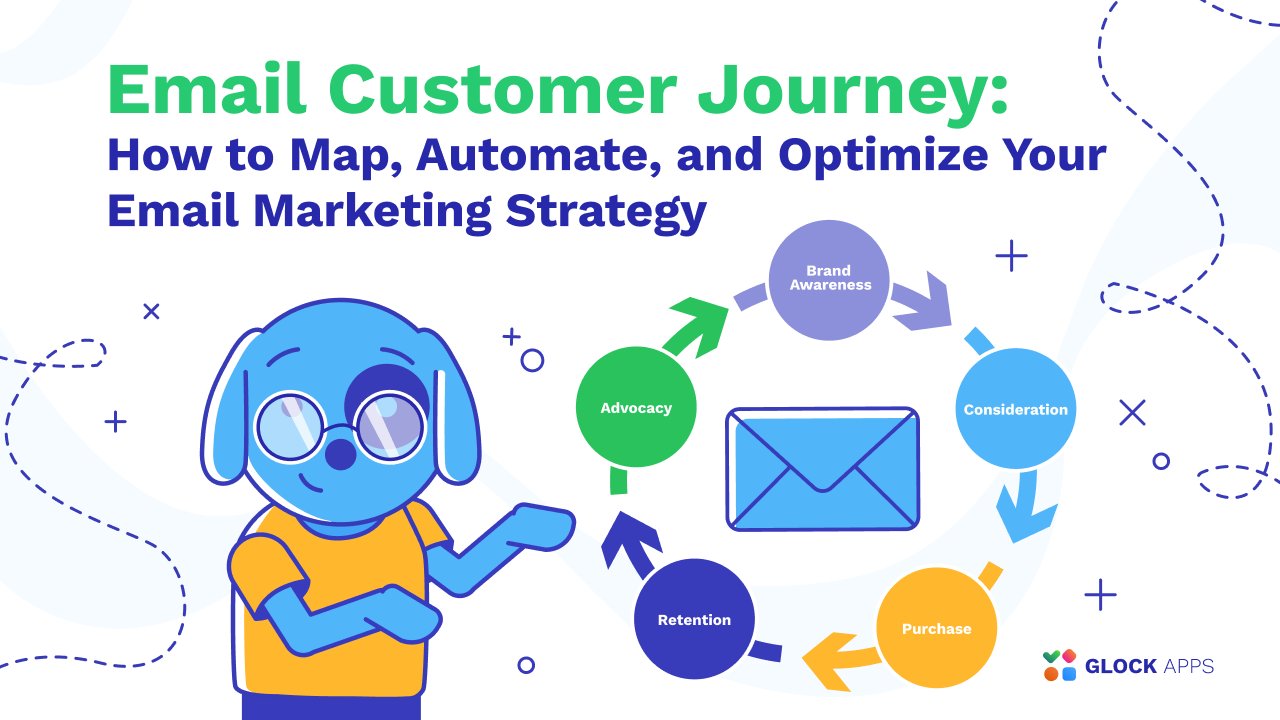
In the world of always-connected businesses and consumers, the customer journey is the pivot around which marketing campaigns turn. When Read more